🍚 함께 짓는 따뜻한 삶의 이야기 : 한국인의 식탁 공동체가 전하는 정(情)의 서사
A Warm Narrative of Shared Lives : The Emotional Power of Korea's Communal Table (Jeong)
💖 한국 식사 문화, 그 관계의 시작
Korean Meal Culture, The Beginning of a Connection
한국인에게 식사는 단순한 생존 활동 이상의 의미를 지닙니다. 우리는 '같이' 먹는 것을 가장 중요하게 여깁니다. 혼자서 밥 먹는 것을 유난히 어려워하거나 피하는 '혼밥' 문화에 대한 거부감은, 한국 사회의 뿌리 깊은 공동체 문화와 관계성에서 비롯됩니다.
For Koreans, eating a meal signifies more than mere survival; it holds a deeper meaning. We prioritize eating 'together' above all else. The reluctance or difficulty some Koreans feel towards 'Honbap' (eating alone) stems from the deep-rooted communal culture and relationship-centric focus of Korean society.
"밥 한 끼 같이 하자"는 말은 곧 "당신과 관계를 맺고 싶다"는 따뜻한 제안과 같습니다. 식탁은 서로의 마음을 확인하고, 정서적 유대를 쌓는 중요한 공간입니다. 이러한 한국인의 특성인 관계 중심적인 사고방식은, 메뉴를 고르는 순간부터 음식을 나누는 모든 과정에 깊숙이 스며들어 있습니다. 지금부터 이 따뜻한 한국 식사 문화의 서사를 자세히 살펴보겠습니다.
The phrase, "Let's eat a meal together, " is essentially a warm invitation: "I want to build a relationship with you." The dining table is a crucial space for confirming each other's feelings and fostering emotional bonds. This distinct Korean characteristic—a relationship-centric mindset—is deeply embedded in every process, from choosing the menu to sharing the food. Now, let's explore the warm narrative of this Korean meal culture in detail.
1. 🥄 '모 먹을래?' 묻는 마음 : 관계를 짓는 첫 번째 배려
1. 🥄 "What Are You Having?": The First Act of Care That Builds Connection
한국 사람들에게 식사 시간이란 단순히 허기를 채우는 물리적 행위를 넘어, 관계의 온도를 확인하고 서로의 마음을 보듬는 정서적 교류의 장입니다. 서구 문화가 메뉴 선택에서 철저히 개인의 기호(Individual Preference)를 우선시한다면, 한국의 식당 풍경은 사뭇 다릅니다. 우리는 메뉴판을 받아 들자마자 습관적으로 옆 사람에게 고개를 돌려 묻습니다. "모 먹을래?" 이 부장님께서 말씀해 주신 심리학 박사님의 통찰처럼, 이 질문은 단지 상대방의 취향을 물어보는 것을 넘어섭니다.
For Koreans, mealtime is far more than a physical act of satisfying hunger; it is an emotional exchange where the temperature of a relationship is checked, and hearts are nurtured. While Western culture strictly prioritizes individual preference in menu selection, the scene at a Korean restaurant is distinctly different. We habitually turn to the person next to us and ask, "What are you having?" (or 'Mo meogeullae?'). As the psychologist's insight you mentioned suggests, this question transcends a simple inquiry about taste.
이 질문 속에는 '우리가 함께 만들어낼 식탁 위의 조화'를 고민하는 깊은 배려가 담겨 있습니다. 내가 좋아하는 메뉴가 순두부찌개일지라도, 동행인이 뜨거운 것을 잘 못 먹거나, 여럿이 함께 나누어 먹기 좋은 전골을 선호한다면, 내 선택은 기꺼이 변화합니다. "나는 원래 이걸 좋아하지만, 너와 함께 먹기 위해 이 메뉴를 고를게." 이것은 우유부단함이 아니라, '나'보다 '우리'를 먼저 생각하는 한국인의 관계 중심적인 사고방식의 발현입니다.
Hidden within this question is a deep consideration for 'the harmony we will create on the table together.' Even if my personal favorite is spicy soft tofu stew, my choice readily shifts if my companion cannot tolerate heat, or if a communal dish like a hotpot is better suited for sharing among the group. This is not indecision; it is the manifestation of the Korean relationship-centric mindset that prioritizes 'us' over 'I'. It's an internal dialogue: "I like this, but I'll choose this other thing so we can enjoy it together."
이러한 식사 문화는 한국 사회의 근간을 이루는 중요한 요소 중 하나입니다. 함께 메뉴를 고르는 과정 자체가 서로에게 맞추어 가는 일종의 사회적 협상이며, 이 협상을 통해 우리는 공동체 의식과 소속감을 강화합니다. 결국 '모 먹을래?'라는 세 글자는, '나는 너와 기꺼이 함께하고 싶고, 너의 만족이 곧 나의 만족이 된다'는 따뜻한 선언인 것입니다.
This Korean food culture is a cornerstone of society. The process of choosing a menu together is a form of social negotiation, and through this negotiation, we strengthen our sense of community and belonging. Ultimately, the simple phrase "What are you having?" is a warm declaration: 'I genuinely want to be with you, and your satisfaction will become my satisfaction.'
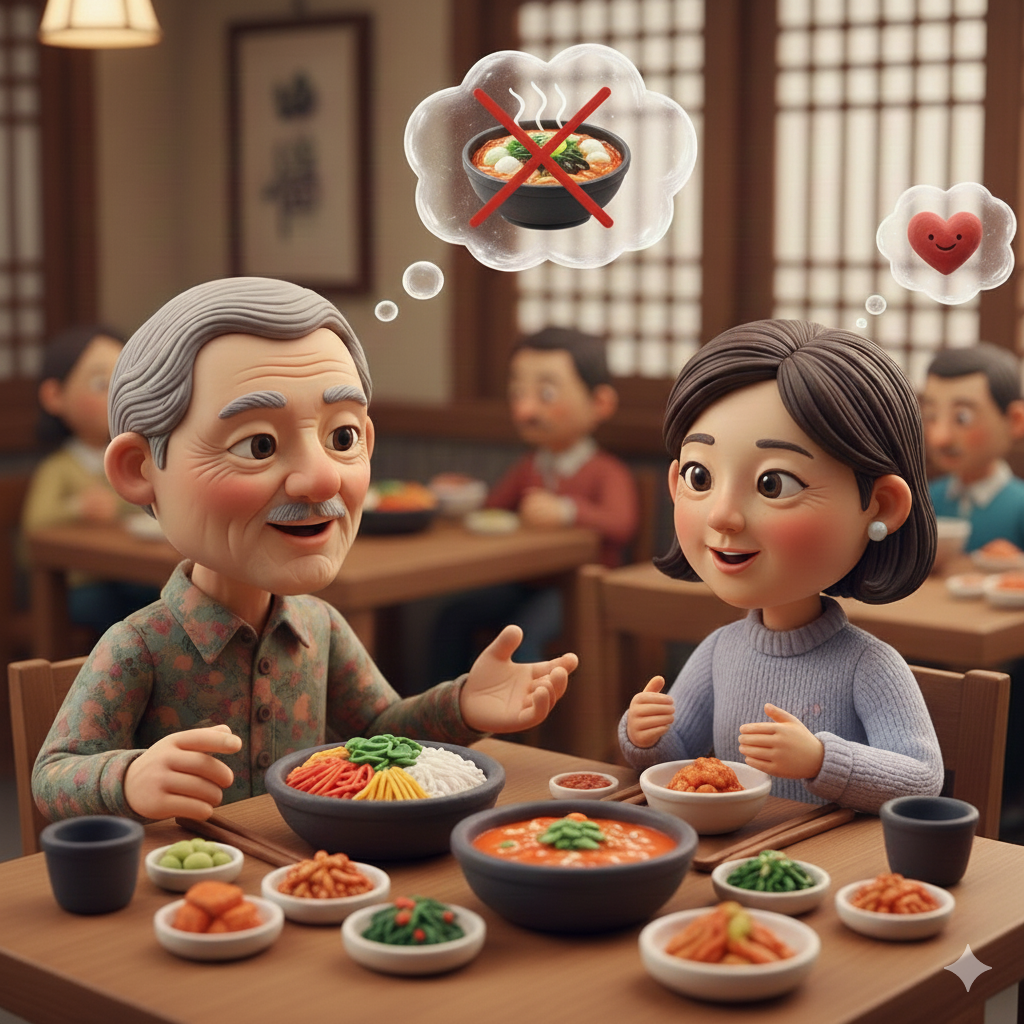
📌 아버지가 좋아하는 칼국수 대신
Sacrificing Father's Beloved Kalguksu (Noodle Soup)
그날, 오랜만에 고향에 내려가 아버지를 모시고 식당에 들어섰습니다. 아버지는 면 요리를 가장 좋아하셔서, 이미 머릿속에는 얼큰한 해물 칼국수가 정해져 있었습니다. 하지만 메뉴판을 보기도 전에 아버지는 습관처럼 제게 물었습니다. "얘야, 너는 뭐 먹을래?" 저는 당연히 아버지께서 좋아하시는 칼국수를 권해드렸습니다. 그러자 아버지는 잠시 머뭇거리시더니, "네가 어릴 때부터 비빔밥을 좋아했지 않으냐. 오랜만에 같이 앉았는데, 칼국수는 다음에 먹어도 된다. 네가 좋아하는 비빔밥 하나랑, 같이 나눠 먹을 김치찌개 하나 시키자꾸나."라고 말씀하셨습니다. 아버지는 당신의 1순위 메뉴를 포기하고, 딸이 좋아하는 것을 함께 나누어 먹는 즐거움을 선택하신 것입니다. 그날의 비빔밥은 특별할 것 없는 메뉴였지만, 아버지가 보여주신 그 작은 배려 하나가 제 마음속 가장 따뜻한 한국 음식 문화의 기억으로 남아있습니다.
That day, I visited my hometown and took my father out to eat. Since he absolutely loves noodles, I had already decided on the spicy seafood Kalguksu (Korean Noodle Soup) in my mind. But before even looking at the menu, my father habitually asked me, "My dear, what are you having?" I suggested the Kalguksu he loved, but he paused and then said, "You've loved Bibimbap since you were little, haven't you? We haven't sat down together in a while; the Kalguksu can wait. Let's order one Bibimbap for you and one Kimchi Jjigae (stew) for us to share." My father willingly gave up his top choice, opting instead for the pleasure of sharing what I loved. That day's Bibimbap was an ordinary dish, but the small act of care my father showed remains one of the warmest memories of Korean hospitality and food culture in my heart.
2. 🍲 식탁 위의 '정(情)의 경제학' : 나누어 먹는 풍요로움
2. 🍲 The 'Economics of Jeong' on the Table : The Richness of Sharing
한국의 식탁에는 유독 '나눔'과 '공유'의 미덕이 풍성합니다. 찌개 공동체라는 말이 있을 정도로, 하나의 냄비에 담긴 뜨거운 국물을 다 함께 떠먹고, 수많은 밑반찬을 나누어 먹는 것은 한국 식사의 기본 풍경입니다. 이 모습은 서양 문화권에서 개인 접시에 담긴 음식 외에 다른 사람의 음식을 공유하는 것을 꺼리는 것과 극명하게 대비됩니다.
The Korean table is uniquely rich in the virtues of 'sharing' and 'communal eating.' It is common for everyone to share a bubbling pot of jjigae (stew) and divide countless side dishes (Banchan), embodying the concept of the 'stew community.' This sharply contrasts with cultures where people are often hesitant to share food outside of their personal plates.
음식을 덜어주는 행위는 한국에서 '정(情)'을 주고받는 가장 직접적이고 물질적인 방식입니다. 김치찜을 먹을 때, 국물이 가장 잘 밴 고기 한 점을 집어 상대방의 밥 위에 올려주는 행동, "이거 엄청 맛있다, 너도 먹어봐"라며 자신이 좋아하는 반찬을 덜어주는 행동 등은 말로 표현하기 어려운 애정과 보살핌을 전달합니다. 특히 어머니가 자녀에게, 또는 시어머니가 며느리에게 가장 좋은 음식을 덜어주는 모습은 가족 간의 유대와 사랑을 확인하는 깊은 상징성을 지닙니다.
The act of portioning food for another is the most direct and tangible way Koreans exchange 'Jeong' (a deep feeling of affection, bond, and connection). Picking out the piece of pork soaked best in sauce from the Kimchi Jjim and placing it on someone's rice, or serving a favorite side dish with the words, "This is delicious, you must try it, " conveys care and affection that words often fail to capture. When a mother serves the best morsel to her child, or a mother-in-law to her daughter-in-law, it is a deeply symbolic affirmation of family bonding and love.
이러한 음식 공유 문화는 과거 농경 사회부터 이어져 온 상부상조의 전통, 즉 두레 정신이 현대 식탁으로 옮겨온 것입니다. 넉넉하지 않은 환경 속에서도 '내가 가진 것을 너와 나누면, 우리가 함께 풍요로워진다'는 공동체 문화의 지혜가 담겨 있습니다. '혼자 먹으면 맛없다'는 단순한 말속에는, 음식의 진정한 맛은 함께 나눔으로써 완성된다는 한국인의 정서가 깊이 스며 있습니다. 이는 단순히 식재료를 나누는 나눔 문화가 아니라, 서로의 삶의 무게와 기쁨을 함께 나누는 따뜻한 서사의 시작점입니다.
This food sharing culture stems from the tradition of mutual help, or Dure, passed down from Korea's agrarian past. It contains the wisdom of the communal spirit: 'If I share what I have, we both become richer.' The simple saying, 'Food is tasteless when eaten alone, ' implies that the true flavor of a meal is completed only through shared experience. This is not merely a culture of sharing ingredients but the beginning of a warm narrative of sharing each other's burdens and joys.

📌 찌개 속 두부 한 조각의 마음
A Piece of Tofu in the Jjigae
대학 신입생 시절, 타지에서 올라와 홀로 자취를 시작했을 때였습니다. 마음이 외롭고 학업에 대한 부담감으로 끼니를 거르기 일쑤였습니다. 그러던 어느 날, 옆집 선배가 저녁이라며 저를 불렀습니다. 상 위에는 특별할 것 없는 김치찌개가 보글보글 끓고 있었습니다. 선배는 말없이 국자로 찌개를 휘젓더니, 두부 한 조각과 묵은지 한 줄을 조심스럽게 건져 제 밥그릇 위에 놓아주었습니다. "혼자 먹으면 입맛 없잖아. 이거 먹고 기운 내. 이 두부가 오늘 너의 정서적 치유 버튼이다." 평범한 한식이었지만, 그 두부 한 조각은 단순히 음식이 아니었습니다. 그것은 '너의 외로움을 알고 있다', '너는 혼자가 아니다'라는 선배의 무언의 위로와 응원이었습니다. 그날 이후 저는 찌개 속 가장 맛있는 재료를 다른 사람에게 덜어줄 때마다, 그 시절 선배에게서 받은 따뜻한 정(情)을 떠올리며 나눔의 기쁨을 실천합니다.
It was during my freshman year of college, when I had moved away from home and started living alone. Feeling isolated and overwhelmed by academic pressure, I often skipped meals. One evening, a senior from next door called me over for dinner. On the table was a simple, bubbling Kimchi Jjigae. Without saying much, the senior stirred the stew and carefully placed a piece of tofu and some aged kimchi onto my rice bowl. "You lose your appetite when you eat alone, don't you? Eat this and get your energy back. This tofu is your emotional healing button for today." The ordinary Korean dish was anything but ordinary. That piece of tofu was the senior's unspoken comfort and encouragement: 'I know your loneliness, ' and 'You are not alone.' Ever since, whenever I dish out the best ingredient to someone else, I recall the warm Jeong I received then, continuing the joy of sharing.
3. 🫂 '같이 먹자'의 치유력 : 외로움을 녹이는 한 끼의 위로
3. 🫂 The Healing Power of 'Let's Eat Together' : Melting Away Loneliness
한국 사회에서 함께 식사하는 행위는 이처럼 복잡다단한 인간의 감정을 보듬어주는 가장 강력하고 자연스러운 정서적 치유의 기능을 합니다. 혼자 밥을 먹는 혼밥이 일반화된 현대 사회에서도, 여전히 우리는 중요한 순간이나 힘든 시기에 "밥 한번 같이 먹자"는 제안으로 서로에게 다가섭니다.
In Korean society, the act of eating together serves as the most powerful and natural function of emotional therapy, addressing the complexities of human feelings. Even in the modern era, where eating alone (Honbap) has become common, we still reach out to one another with the offer, "Let's eat a meal together, " during important or difficult times.
이 제안은 '너의 어려움을 내가 이해한다'는 공감의 메시지이자, '너는 혼자가 아니다'라는 소속감과 유대감을 전달하는 가장 확실한 표현입니다. 따뜻한 밥상은 침묵 속에서도 위로를 건넵니다. 우울함으로 인해 입맛을 잃었을 때, 억지로라도 함께 밥을 먹는 과정은 고립감을 해소하고, 다시 세상과 연결되는 감각을 되찾게 해 줍니다. 식사 자리에서 나누는 소소한 대화와 웃음, 그리고 상대방이 나를 위해 음식을 덜어주는 작은 행동들은 객관적이고 은은한 정서적 응원이 되어줍니다.
This offer is a message of empathy, saying 'I understand your struggle, ' and the surest way to convey belonging and solidarity: 'You are not by yourself.' A warm meal provides comfort even in silence. When loss of appetite comes with sadness, the process of eating together, even reluctantly, helps dissolve isolation and restores the feeling of connection to the world. The small talk, laughter, and the simple act of someone serving you food become objective and gentle emotional support.
결국 한국 음식 문화의 핵심은 단순한 한식의 맛이 아니라, 그 한 끼 식사 안에 담긴 인간적인 따뜻함과 관계의 깊이입니다. '같이 먹자'는 세 글자에는 "네 삶의 여정을 내가 기꺼이 함께 걷겠다"는 끈끈한 공동체 정신이 담겨 있습니다. 이 서사형 글의 목표는 바로 이 '함께'의 가치를 세상에 전달하는 것입니다. 바쁜 일상 속에서 잠시 멈추어, 소중한 사람과 함께 숟가락을 마주하며 정을 나누는 한국인의 식탁 공동체의 힘은, 우리 사회를 지탱하는 가장 근본적인 따뜻한 서사입니다.
Ultimately, the core of Korean food culture is not just the taste of Hansik (Korean cuisine) itself, but the human warmth and depth of connection embedded within that one meal. The three words, 'Let's eat together, ' hold the tenacious communal spirit that says, "I will gladly walk this journey of life with you." The power of the Korean communal table, where people briefly pause their busy lives to share affection over spoons, is the fundamental warm narrative that sustains our society.
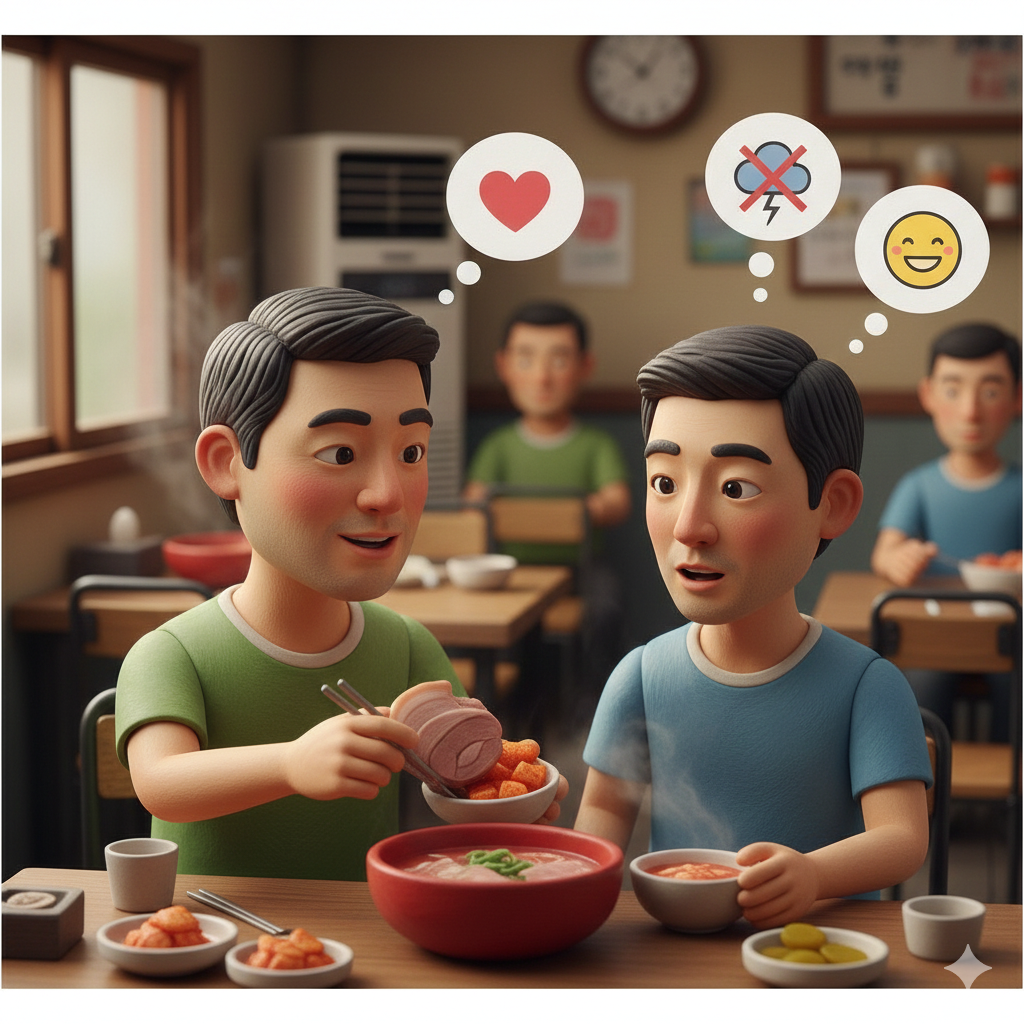
📌 결혼 발표 후의 국밥 한 그릇
A Bowl of Gukbap After a Marriage Announcement
제가 2019년 3월에 결혼을 앞두었을 때였습니다. 벅찬 기쁨도 있었지만, 새로운 출발에 대한 막연한 두려움과 책임감에 마음이 무거웠습니다. 그때, 회사의 오래된 선배 한 분이 퇴근길에 저를 조용히 부르셨습니다. 화려한 레스토랑이 아닌, 회사 근처의 허름한 국밥집이었습니다. 선배는 뜨끈한 국밥 두 그릇을 시키더니, 다른 말 없이 깍두기를 덜어주고 부추를 국물에 넣어주었습니다. 한참을 아무 말 없이 밥만 말아먹던 선배가 갑자기 말했습니다. "이 부장, 결혼 축하한다. 두려워하지 마. 혼자 먹을 때 힘들던 밥도, 둘이 먹으면 든든해지는 법이야. 이 뜨거운 국밥처럼, 네 아내와 함께라면 어떤 시련도 녹여낼 수 있을 거다. 같이 먹자." 그날 밤, 땀을 흘리며 먹은 국밥은 제게 단순한 저녁 식사가 아니었습니다. 그것은 가족 간의 유대를 시작하려는 남자에게 선배가 건넨, 가장 현실적이고 가슴 따뜻한 서사가 담긴 축복과 정서적 지지였습니다. 그 국밥의 온기 덕분에 저는 결혼 생활을 용기 있게 시작할 수 있었습니다.
It was back in March 2019, just before my wedding. While I was filled with joy, I also felt a heavy sense of responsibility and a vague fear about starting this new chapter of my life. That evening, a senior colleague of mine quietly called me out after work. He didn't take me to a fancy restaurant but to a humble, old Gukbap (soup with rice) place near the office. Without saying much, he served me some radish kimchi and added chives to my steaming soup. After we had been eating in silence for a while, he suddenly spoke up. "Congratulations on your wedding, Lee Boojang. Don’t be afraid. A meal that feels heavy when eaten alone becomes heartening when eaten together. Just like this warm soup, you and your wife will be able to melt away any hardships as long as you are together. Let’s eat." That bowl of Gukbap I ate while breaking a sweat that night was more than just dinner. It was the most practical and heartwarming narrative of blessing and emotional support a senior could give to a man about to start a family. The warmth of that meal gave me the courage to begin my married life with confidence.
#한국문화 #식탁공동체 #같이먹자 #한국의정 #나눔문화 #공동체정신 #한식문화 #음식공유 #관계성 #따뜻한서사 #정서적유대 #혼밥문화 #한국인특성 #식사심리학 #음식치유 #KoreanCulture #CommunalTable #EatTogether #KoreanJeong #SharingFood #FoodCulture #CommunalSpirit #Hansik #RelationshipGoals #EmotionalBonding #KoreanDining #FoodPsychology #WarmNarrative #CultureofSharing #Koreans
© 2024 WISE OPTION. All rights reserved.
본 콘텐츠는 와이즈옵션이 운영하는 AllUWant 홈페이지에 게시된 창작물입니다.
무단 복제, 배포, 2차 활용은 자제해 주시기 바랍니다.
WISE OPTION is the creator and operator of the AllUWant website.
Unauthorized use of this content is discouraged.
'Korean Mind & Culture' 카테고리의 다른 글
| Rabbit Zodiac 2026 : 토끼띠 청년의 취업/연애 성공을 위한 K-풍수 인테리어 (0) | 2026.01.07 |
|---|---|
| 2026 Tiger K-Feng Shui : 역마살 해소! 호랑이띠 인생 2막 안착 인테리어 (0) | 2025.12.08 |
| 2026 Ox Zodiac K-Feng Shui : 소띠 부부에게 복을 불러오는 흙 기운 인테리어 비법 (0) | 2025.12.06 |
| K-Feng Shui Secrets (2026) for the Rat : 쥐띠 맞춤 재물&안정 운세 전략 (0) | 2025.12.02 |
| Kimjang : An Outsider’s Deep Dive into Korean Family Jeong 김장 (0) | 2025.11.29 |


